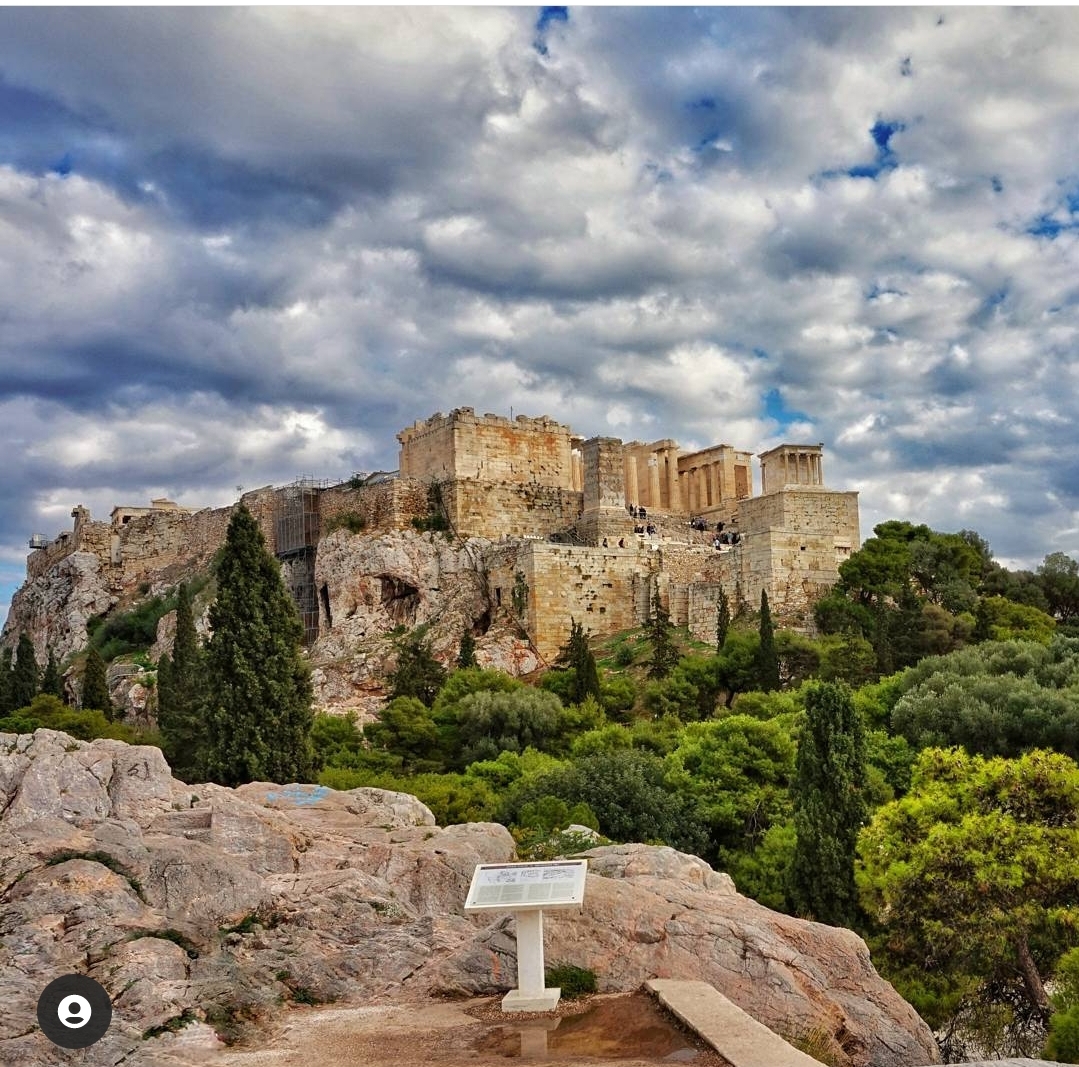
Areopagus Hill — Athens, Greece
Historic Landmark · Athens
About Areopagus Hill
Areopagus Hill is one of the most historic sites in Athens, offering views of the Sacred Rock of the Acropolis. According to tradition, this is where Apostle Paul delivered his first speech to the Athenians. The hill offers panoramic views of the Acropolis and the city.
Welcome to Areopagus Hill (Λόφος Αρείου Πάγου), widely recognized as the central Mars Hill of Athens. Located in the heart of Athens, Attica, Greece, this destination serves as a primary hub for travelers visiting the region. When visiting Areopagus Hill, visitors can easily explore surrounding historical landmarks and points of interest, including the Acropolis of Athens and the Roman Agora.
Visit Tips
- The best time to visit is at sunset.
- Wear comfortable shoes for the climb.
- In summer, prefer morning or afternoon hours.
- There are benches for resting at the top.
Highlights
- Panoramic view of the Acropolis
- Historic site of Apostle Paul's speech
- Large limestone rock
- Ideal spot for photography
About Areopagus Hill
Basic Information
Official Name
Areopagus Hill (Λόφος Αρείου Πάγου)
Attraction Type
Historic Landmark / Archaeological Site
Google Rating
4.8 (5,603)
Plus Code
XPCF+W7 Athens, Greece
Address
Theorias 21, Athina 105 55, Greece
Visiting Hours
Access
Open 24 hours, all year round
Best Time to Visit
Spring: Pleasant climate, blooming flowers
Summer: Prefer morning or evening, avoid midday heat
Best Time to Visit
Autumn: Mild weather, ideal for walking
Winter: Fewer tourists, clear views
No ticket required. Recommended to visit at sunset for the best view.
Admission Information
Site Visit
Free for the public
Parking
Free public parking available nearby
Guided Tours
Available through local tourism operators
How to Get Here
From Center (Plaka/Monastiraki)
Distance about 1km from Plaka. You can walk or take the metro (Monastiraki/Thisseio stations).
From Airport
Distance about 40km. Take the metro from the airport to Monastiraki station.
From Metro Station
Monastiraki or Thisseio stations (Lines 1 and 3).
Public Transport
Metro: Monastiraki or Thisseio stations.
Walking
10-15 minutes walk from Plaka or Monastiraki.
Driving
Limited parking in the area. Public transport is recommended.
Current Weather & Forecast
Check the current weather conditions and 7-day forecast for Areopagus Hill. Plan your visit accordingly — clear skies at sunset make for the best photos!
Current Weather
7-Day Forecast
Slippery Rock Warning & Safety Tips
The marble and limestone surface of Areopagus Hill has become extremely smooth over thousands of years. Many visitors have slipped and been injured. Please take these precautions seriously.
Wear Non-Slip Shoes
Flat shoes with rubber grips are essential. Avoid sandals, heels, or smooth-soled shoes.
Bring a Flashlight at Night
While there is some lighting, it is not enough to see the uneven rock surface clearly.
No Guardrails at Edges
The hill has no protective barriers at the edges. Stay away from steep drops, especially in darkness.
Supervise Children Closely
Children should always hold an adult's hand. The rocks are uneven and very slippery.
About Areopagus Hill
History & Mythology
The Areopagus (Mars Hill) was the seat of the aristocratic council and highest criminal court in ancient Athens. In mythology, Ares was tried here for the murder of Poseidon's son. In the 1st century AD (around 51 AD), Apostle Paul delivered his famous 'Unknown God' sermon here, a significant event in early Christianity.
Geography & Geology
The hill is located northwest of the Acropolis, near the Roman Agora, with an elevation of about 115 meters. Composed primarily of exposed marble and limestone, its surface has become extremely smooth over millennia of weathering and visitors' footsteps. Its location makes it one of the best spots to view the Acropolis and the city of Athens.
Architecture & Ruins
Unlike other ancient sites in Athens, the Areopagus features almost no monumental structures, consisting mainly of bare rock. At the base, you can find the ruins of the church dedicated to Saint Dionysius the Areopagite, the first bishop of Athens who converted after Paul's sermon. Access to the top is via modern metal stairs or ancient stone steps cut into the rock.
Protection & Preservation
As a site of immense historical and cultural value, Areopagus Hill is managed by the Athens Ephorate of Antiquities and protected by Greek heritage laws. To preserve the sacred rock and ensure safety, authorities have installed partial handrails on the steep sections while maintaining its natural appearance.
History, Myths & Legends
Areopagus Hill carries over 3,000 years of layered history — from Greek mythology to the birthplace of Western jurisprudence, from ancient trials to the spread of Christianity.
The Trial of Ares
According to Greek mythology, the Areopagus — literally 'Hill of Ares' — gets its name from the god of war, Ares. Legend says that Ares was tried here by the gods for the murder of Halirrothius, a son of Poseidon. Poseidon had accused Ares of killing his son after Halirrothius attempted to assault Ares's daughter Alcippe. This mythological trial is said to be the first court case in human history, establishing the principle that even gods must answer for violence. The twelve Olympian gods served as judges, with Athena casting the deciding vote to acquit Ares, acknowledging the act as defense of family honor.
The Ancient Court of the Areopagus
The Areopagus Council was one of the oldest institutions in ancient Athens, composed of former archons (chief magistrates) who served for life. In the archaic period, this council held enormous power — overseeing laws, religious affairs, and the conduct of public officials. The reformer Solon (c. 594 BC) reorganized the council but maintained its role as a guardian of the constitution. It served as the highest court for cases of homicide, religious offenses, and crimes against the state. The court's authority and solemnity made it a symbol of Athenian justice.
Democratic Reforms and Declining Power
As Athens developed its radical democracy, the power of the aristocratic Areopagus Council was progressively reduced. In 462 BC, the reformer Ephialtes stripped the council of most of its political powers, transferring them to the democratic institutions — the Assembly (Ekklesia), the Council of 500 (Boule), and the popular courts. However, the Areopagus retained its prestige as the court for homicide trials, a role it maintained for centuries. The philosopher Aristotle later wrote that the council's remaining judicial functions made it 'the guardian of the laws.'
Apostle Paul's Sermon — The 'Unknown God'
One of the most significant events in the hill's history occurred around 51 AD, when the Apostle Paul was brought before the Areopagus Council to explain his new teachings. According to the Acts of the Apostles (Chapter 17), Paul had been preaching in the Athenian Agora about Jesus and the resurrection. Intrigued but confused by his message, the Athenians brought him to the Areopagus to hear more. Paul's speech — known as the 'Mars Hill Address' — masterfully connected Christian theology to Greek philosophy, referencing an altar he had seen inscribed 'To an Unknown God.' He declared that this unknown god was in fact the creator of all. The speech resulted in several conversions, including Dionysius the Areopagite, who became the first bishop of Athens, and a woman named Damaris.
From Ancient Ruins to Sacred Memory
During the Byzantine period, a small church dedicated to Saint Dionysius the Areopagite was built at the base of the hill, commemorating Paul's conversion of Athens's first bishop. The hill and its surroundings remained a place of religious significance through the centuries. During the Ottoman period (15th–19th century), the area around the Areopagus was largely undeveloped, and the ancient rock stood as a silent witness to centuries of changing empires. Travelers and archaeologists visiting Athens during this period often noted the hill's striking appearance and its connection to both classical and biblical history.
A Living Monument
Today, Areopagus Hill stands as one of Athens's most visited free attractions. The ancient stone steps and modern metal staircases allow visitors to walk in the footsteps of ancient judges, philosophers, and apostles. The site continues to be managed by the Greek archaeological service, which works to preserve the rock's natural character while ensuring visitor safety. The hill remains a place where mythology, history, religion, and natural beauty converge — a rare site where you can stand on the same rock where a god was judged, a council deliberated, and a faith was first proclaimed to Europe.
Recommended Route
Walk up the hill and enjoy the historic view.
Start from Theorias Street near the Roman Agora
Climb the stairs to the top of the hill
Reach the point with the best view of the Acropolis
Visit the church of Saint Dionysius the Areopagite
Conclude with an unforgettable sunset
Landmarks & Attractions Around Areopagus Hill
Acropolis of Athens
Greece's most famous ancient citadel, containing the Parthenon, the Erechtheion, and other monumental masterpieces.
Roman Agora
The commercial and administrative center of ancient Athens, featuring fascinating ruins like the Tower of the Winds.
Plaka District
One of the oldest neighborhoods in Athens, famous for its maze-like narrow streets, neoclassical architecture, and numerous tavernas.
Visitor Services & Facilities
Areopagus Hill itself has no commercial facilities. The following services are available in the surrounding area within walking distance.
Restrooms & WC
There are no restrooms on the hill. The nearest public restrooms can be found in the Plaka district, near the Acropolis Museum, and at cafes along Dionysiou Areopagitou street. Plan ahead before your visit.
Parking
Street parking is available on surrounding roads but spaces are limited, especially during peak tourist season. Public parking garages can be found near Monastiraki square and along Athinas Street. Free roadside parking spots exist on quieter side streets.
Dining & Cafes
The Plaka and Monastiraki neighborhoods offer a wide range of dining options: traditional Greek tavernas, casual cafes, fast food outlets, and restaurants with Acropolis views. The Thisseio area along the pedestrian walkway also has several cafes. Bring your own water and snacks when climbing the hill.
Accommodation
The area around the Acropolis offers various types of accommodation within walking distance: boutique hotels, budget hostels, vacation apartments, and traditional guesthouses. The Plaka, Monastiraki, and Thisseio neighborhoods are the closest options, all within 5–10 minutes on foot.
Supermarkets & Shopping
Small convenience stores and mini markets are scattered throughout Plaka and Monastiraki for water, snacks, and essentials. The Monastiraki Flea Market offers souvenirs and local crafts. Larger supermarkets can be found on Ermou Street and along Athinas Avenue.
Gas Stations & EV Charging
Several gas stations are located along the main roads surrounding the Acropolis area, particularly on Athinas Street and Syngrou Avenue. Electric vehicle charging points are increasingly available in public parking areas in central Athens — check your EV app for the nearest available charger.
Best Sunset Viewpoint in Athens
Areopagus Hill (Mars Hill) is widely regarded as the best free sunset viewpoint in Athens. The smooth limestone rock offers an unobstructed 360° panoramic view of the Acropolis, the city skyline, and Mount Lycabettus — all bathed in golden light.
Sunset Viewing Tips
- Arrive 45 minutes before sunset to secure a good spot on the rock.
- Bring your own drinks and snacks — there are no vendors on the hill.
- The best photo angle faces northwest towards the Acropolis with the setting sun behind it.
- Stay after sunset to see the Acropolis illuminated against the night sky.
- Summer sunset is around 8:30–9:00 PM; winter sunset around 5:15–5:30 PM.
Photo Gallery
The Best View of Athens
Panoramic Acropolis view from Areopagus Hill sunset viewpoint
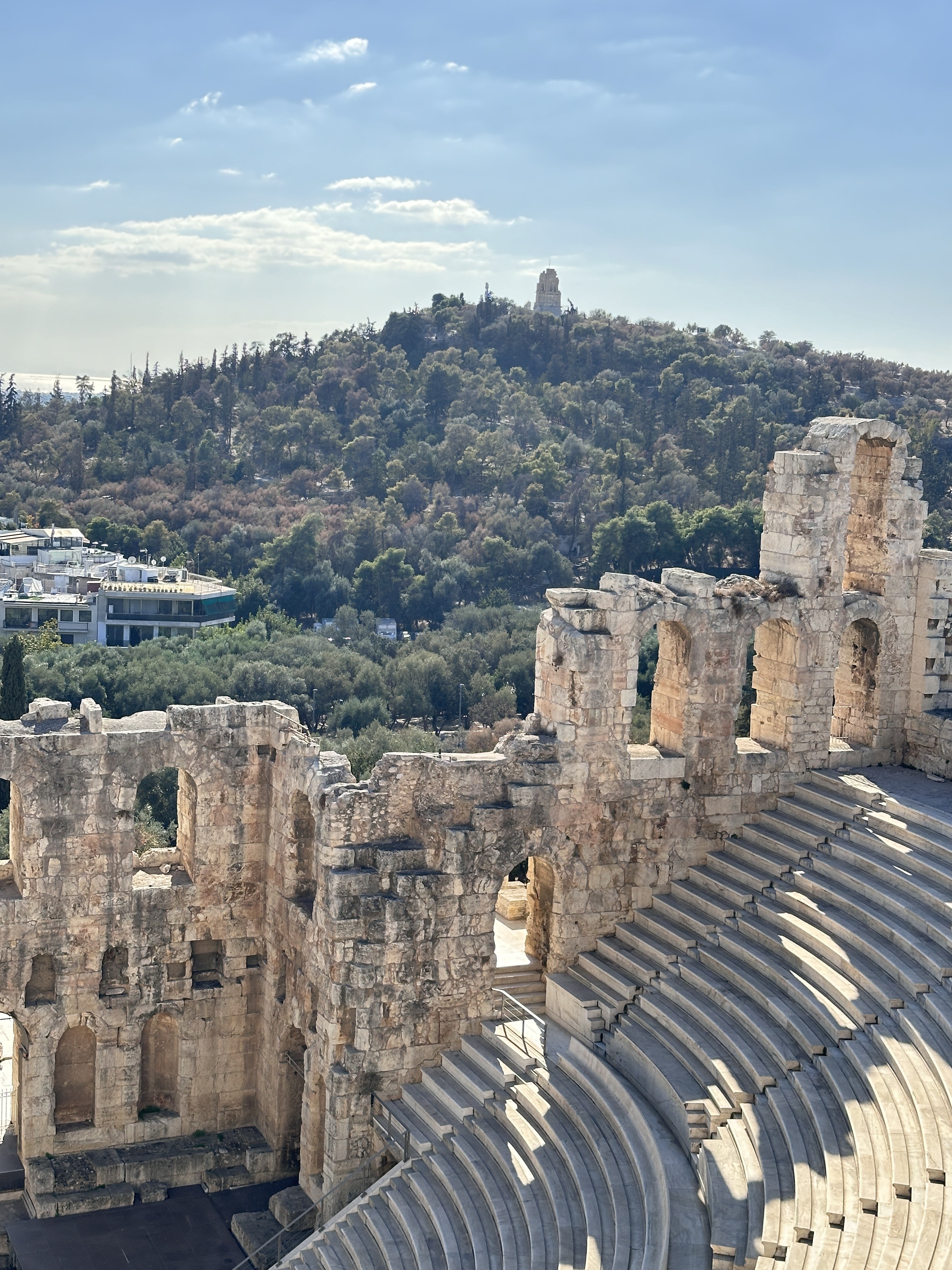
Areopagus Hill limestone rocks near the Acropolis
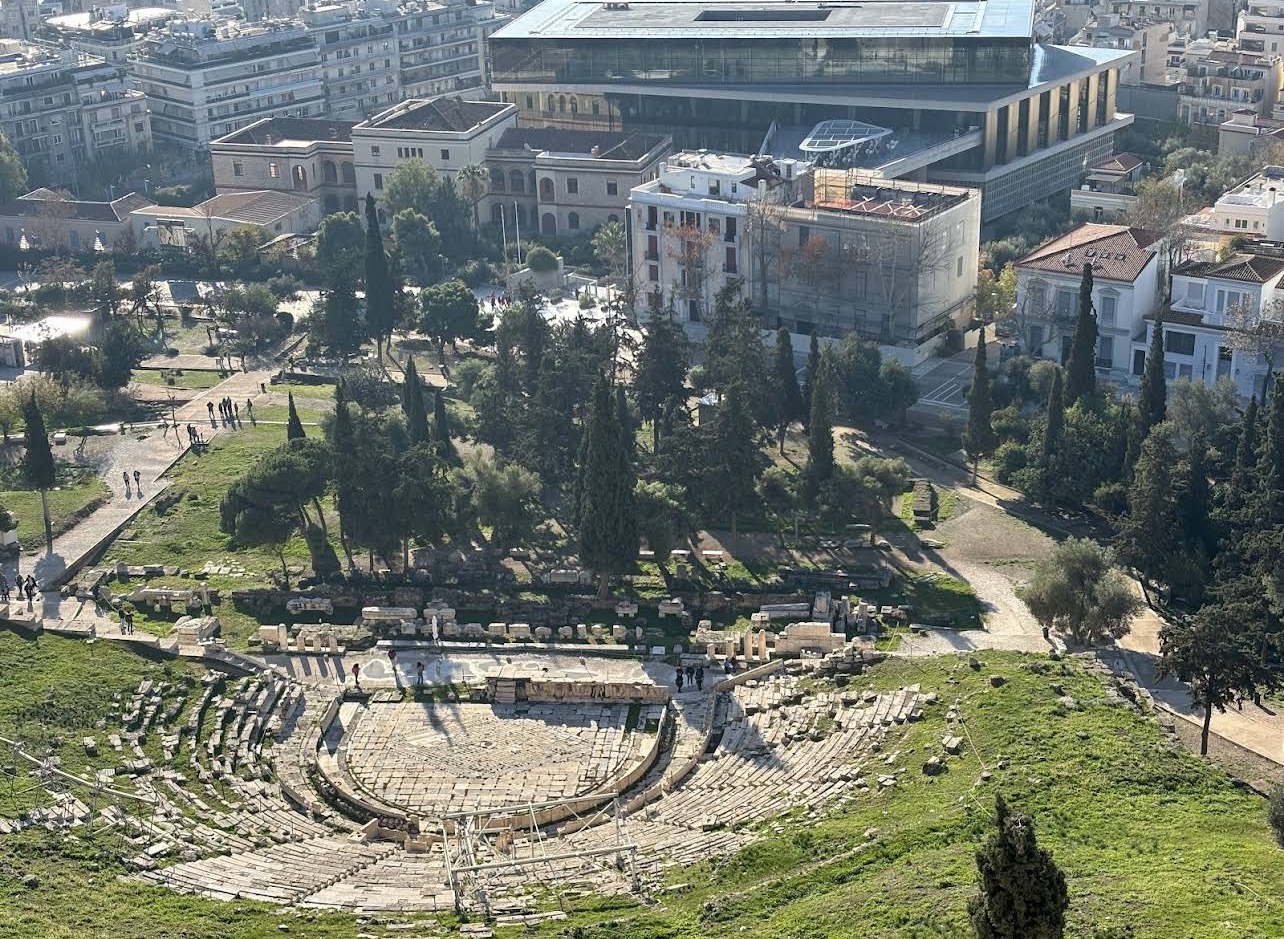
Ancient stone stairs leading to Areopagus Hill summit
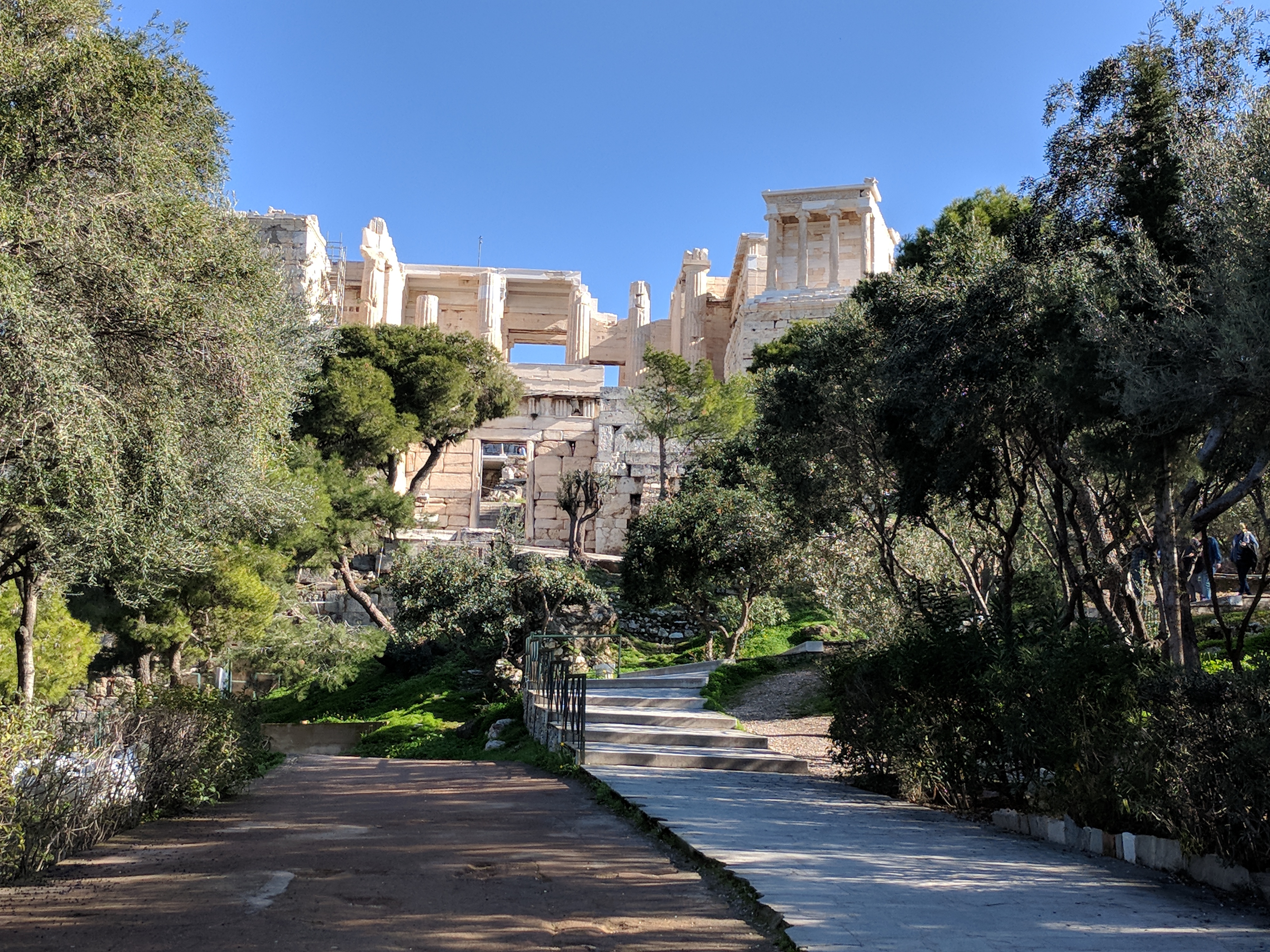
Apostle Paul statue at Mars Hill biblical site
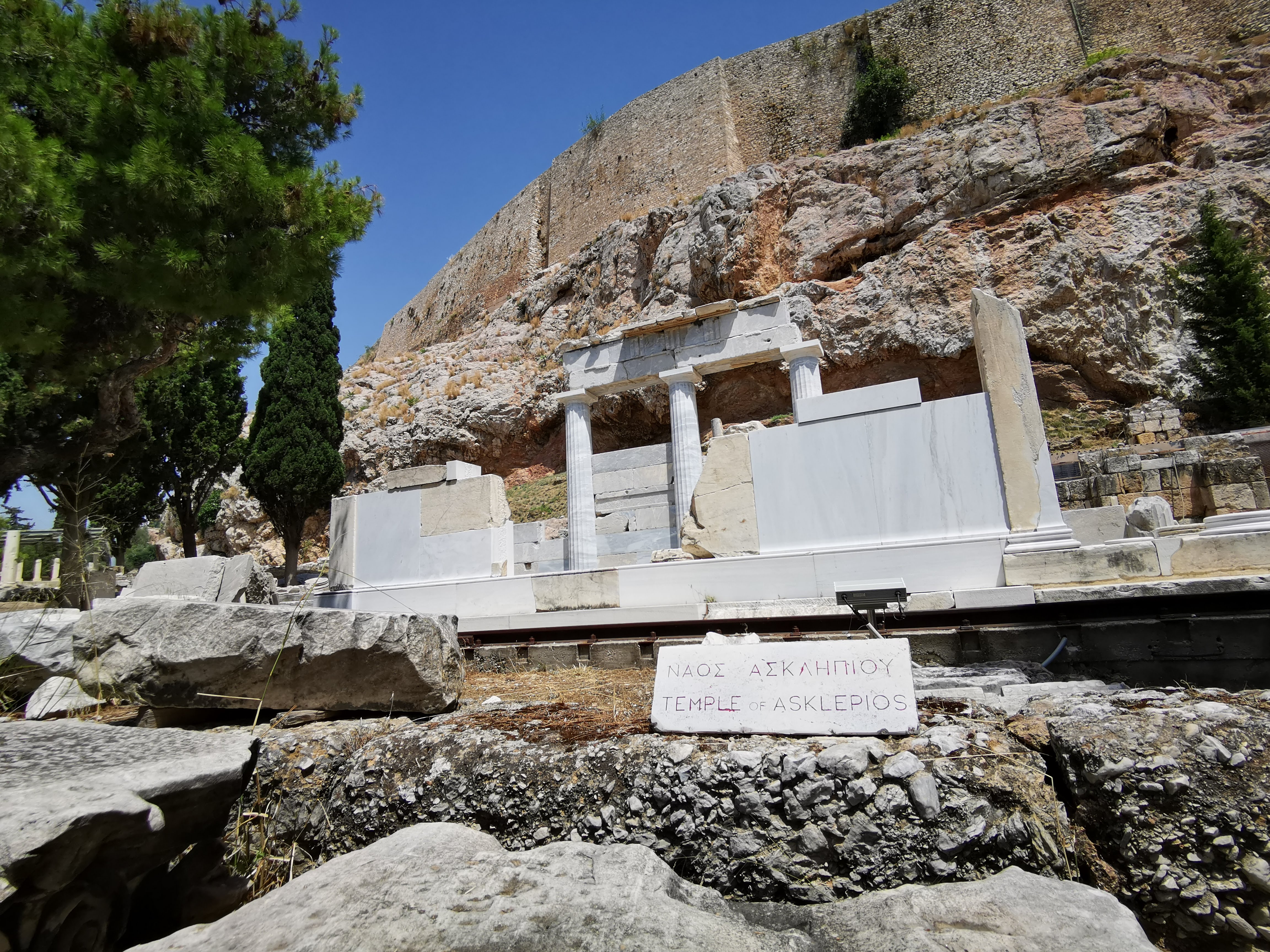
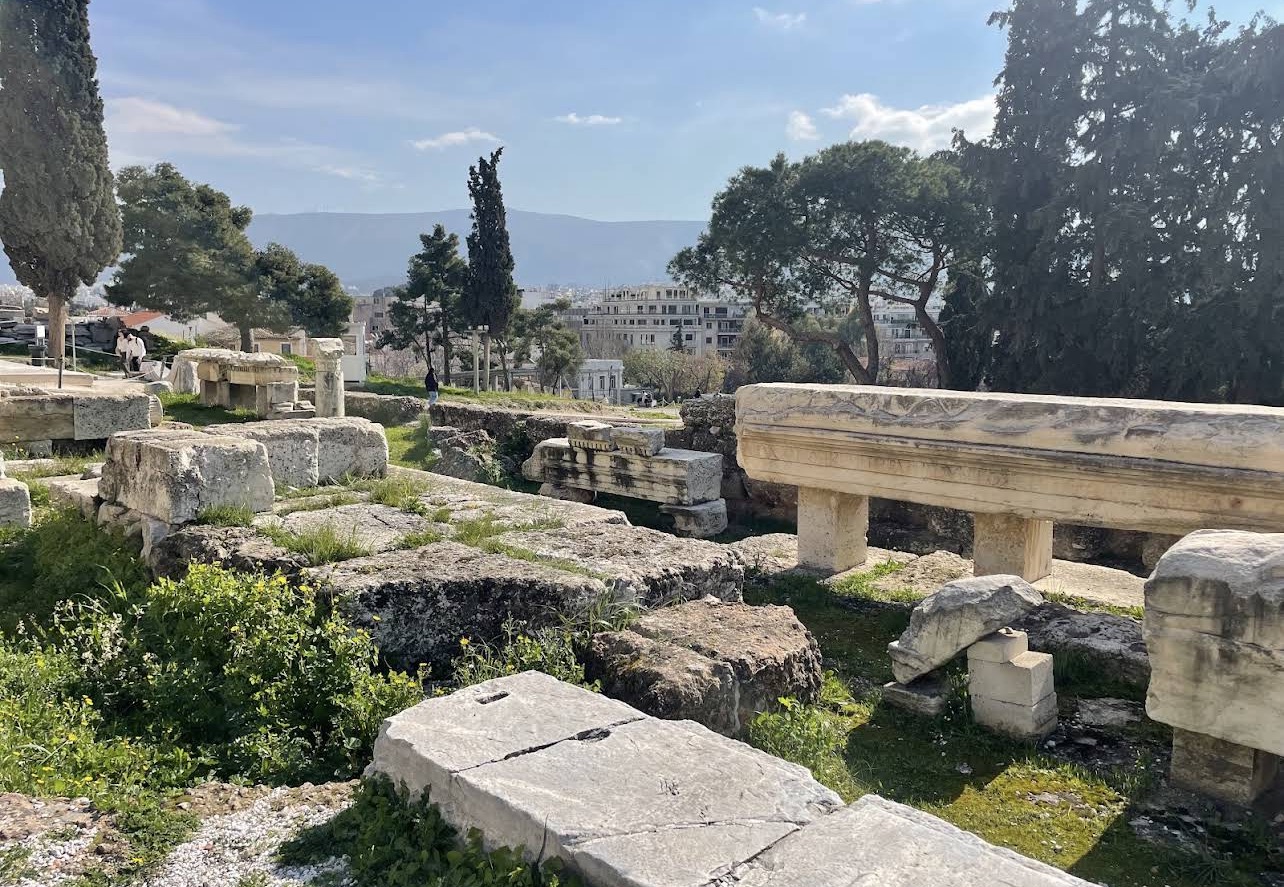
Free panoramic Athens cityscape from Areopagus Hill
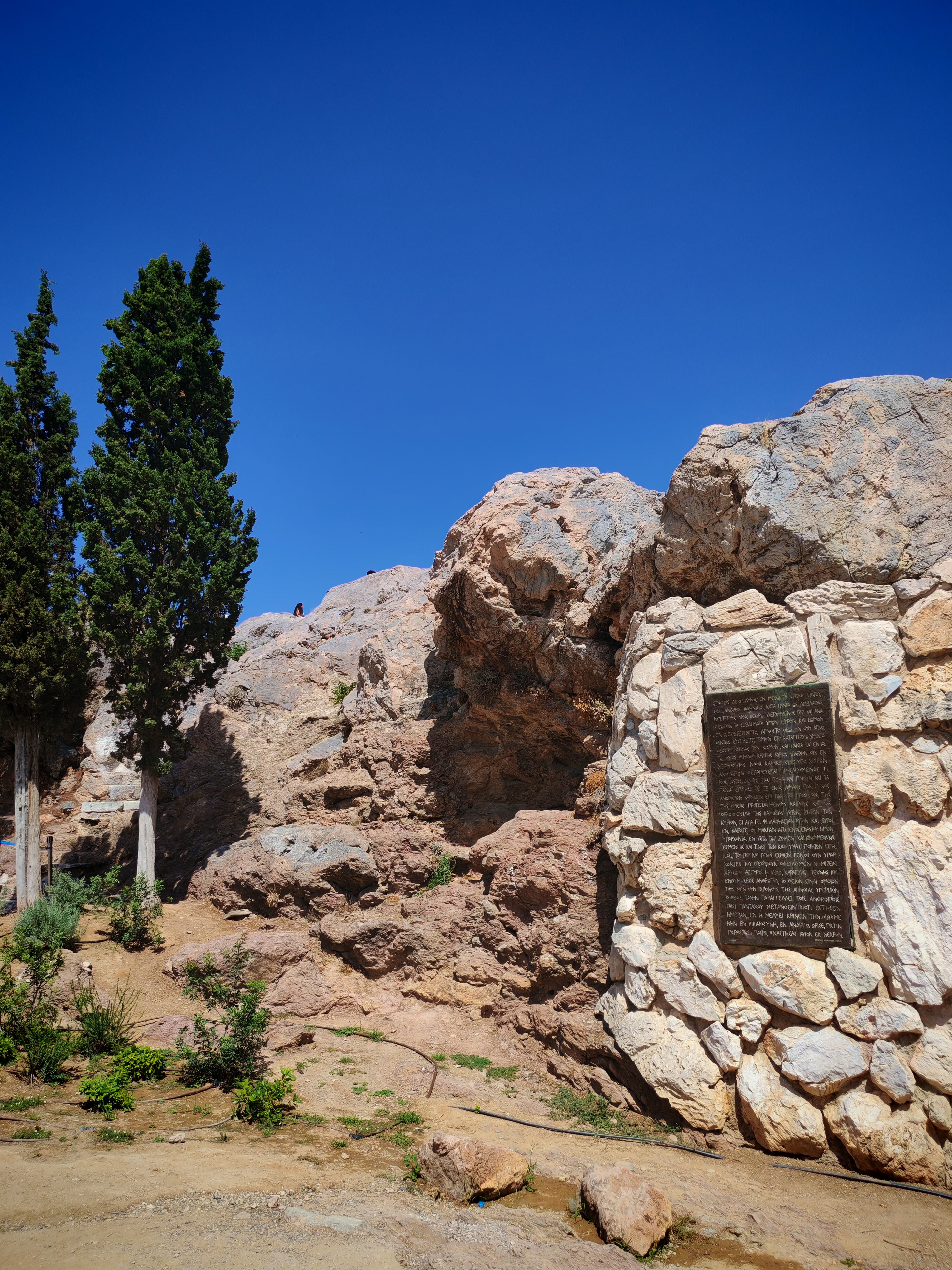
Best sunset view of the Acropolis from Mars Hill
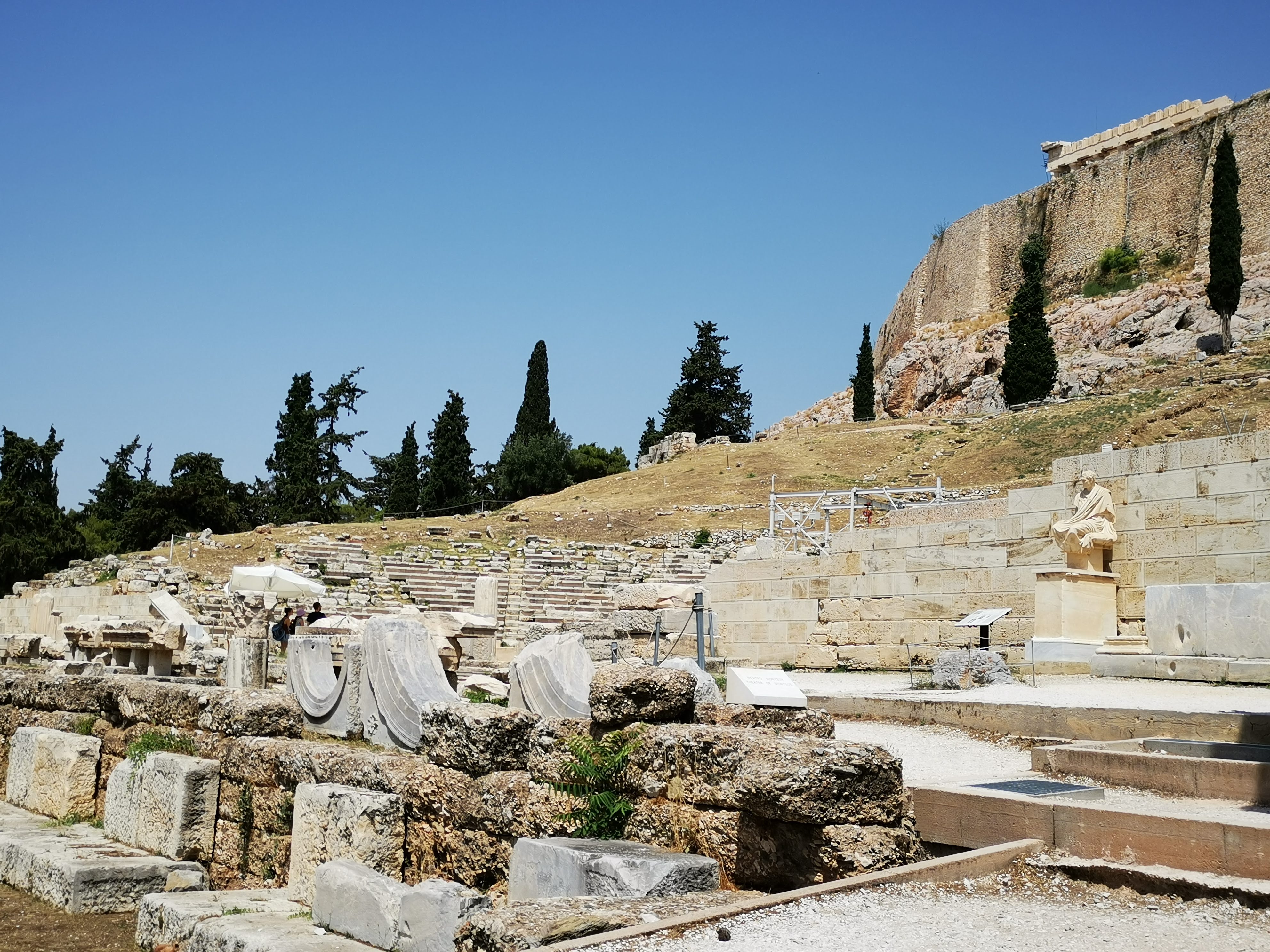
Ancient Areopagus court ruins in Athens
Polished limestone rock formations on Mars Hill
Visitor Reviews
Reviews can be viewed via Google Maps.
Incredible place! The best view of the Acropolis. Recommended to climb at sunset.
Went with my parents and it was excellent. Calm and relaxing place, perfect for family visit.
Very beautiful place for walking. The view is superb. Ideal for photography.
For a visit to Athens, this is one of the top historic attractions you shouldn't miss. Very romantic at sunset.
Historic site with incredible energy. Free admission and amazing views.
Perfect place for relaxation and photography. Don't miss it if you're in Athens.
Sources & References
The information on this page is compiled from the following authoritative sources. We are committed to providing accurate, well-sourced content for our visitors.
Greek National Tourism Organization
Official tourism portal of Greece with comprehensive information about attractions, events, and travel tips.
Hellenic Ministry of Culture & Sports
Government body responsible for the protection and promotion of Greece's cultural heritage, including archaeological sites.
Athens Ephorate of Antiquities
Regional office of the Hellenic Ministry of Culture responsible for archaeological sites and monuments in Athens.
This Is Athens — Official Tourism Website
The official tourism website of the Municipality of Athens with guides, maps, and practical visitor information.
Attica Regional Government
Official website of the Region of Attica, covering local governance, services, and tourism in the greater Athens area.
Google Maps — Areopagus Hill
Location, reviews, and directions for Areopagus Hill (Mars Hill) on Google Maps. Rating: 4.8 stars from 5,603 reviews.
Frequently Asked Questions
Q:Do I need a ticket to visit Areopagus Hill?
No. Areopagus Hill (Mars Hill) is a completely free public site, open 24 hours a day, all year round. You do not need a ticket for the Acropolis to visit it.
Q:What is the best time of day to visit Areopagus Hill?
The best time is sunset, when the Acropolis and the city are bathed in golden light. Arrive about 45 minutes before sunset to secure a good spot on the rock. In summer, mornings and evenings help you avoid the midday heat.
Q:How do I get to Areopagus Hill from Monastiraki?
Walk from Monastiraki or Thisseio metro stations (Lines 1 and 3). It is about a 10–15 minute walk from Plaka or Monastiraki to the hill entrance on Theorias Street, near the Roman Agora.
Q:Is it safe to climb to the top at night?
There is some lighting at night, but the rocks are very slippery and there are no guardrails at the edges. We recommend bringing a flashlight, wearing non-slip shoes, and paying close attention to your footing. The night view of Athens is stunning, but safety comes first.
Q:Are there restrooms or food vendors on the hill?
There are no commercial facilities or public restrooms on the hill itself. It is advisable to use the facilities and grab a bite in the nearby Plaka district or at cafes around the Acropolis beforehand.
Q:Is the climb difficult? Is it suitable for the elderly or children?
The climb is not very high, and there are metal and stone steps available, making it relatively easy for most fitness levels. However, due to the uneven and extremely slippery rocks, elderly visitors and children should be very careful and may need assistance.
Q:What other attractions are near Areopagus Hill?
It sits in the heart of Athens' archaeological district. Within a 3–8 minute walk you'll find the Acropolis of Athens, the Roman Agora, and the Plaka district — easy to combine into a single half-day walking route.
Q:What is the history of Areopagus Hill (Mars Hill)?
Areopagus Hill was the seat of the highest criminal court in ancient Athens, and in mythology Ares was tried here. Around 51 AD, the Apostle Paul delivered his famous 'Unknown God' sermon here, making it a key biblical site also known as Mars Hill.
Location & How to Visit Areopagus Hill in Athens
Theorias 21, Athina 105 55, Greece